Thursday, September 20, 2007

Eternity


As you might have guessed, I have been contemplating an eternal universe lately. I have a nagging feeling that big bang theory is bogus and it comes back to haunt me every few years. Hopefully, one day I'll publish a paper on why big bang theory is fundamentally flawed. Until then, I'll continue to think about other ways to explain the "evidence" for the big bang. I'm not a specialist in the field, but it seems to me that you have to be pretty close minded to buy into big bang theory.

Saturday, September 8, 2007

More on Infinity

Thanks to BBC, the source.
Thursday, 25 April, 2002, 22:13 GMT 23:13 UK
Universe in 'endless cycle'
Deep space, Nasa
The current expansion will go on for trillions of years

Get your head around this: the Universe had no beginning and it will have no end.

Two scientists have put forward a new model to explain how the cosmos is and where it might be going.

They say it is necessary to take account of startling recent discoveries such as the observation that everything in the Universe is moving apart at an accelerating rate.

Paul Steinhardt and Neil Turok propose that the cosmos goes through an endless cycle - of Big Bang, expansion and stagnation - driven by an as yet unexplained "dark energy".

They have put forward their views in the journal Science.

Star surprise

The current model of the Universe starts with a Big Bang, a mighty explosion of space, matter and time about 14 billion years ago.

This model accounts for several important features we see in the Universe - such as why everything looks the same in all directions and the fact that the cosmos appears "flat" (parallel lines would never meet however long).

But the model has several shortcomings, Steinhardt and Turok say.

It cannot tell us what happened before the Big Bang or explain the eventual fate of the Universe. Will it expand forever or stop and contract?

Problems with these futures became apparent in 1998, when studies of distant, exploding stars showed the Universe was expanding at an accelerating rate. It was a big surprise for some astronomers who thought everything might eventually come back together in a "Big Crunch".

Empty and flat

The apparent acceleration has since been checked and shown to be real.

It led cosmologists to revive an old idea that some "dark energy" is at work in the cosmos, pushing everything apart.

Steinhardt and Turok put this energy - a scalar field as they mathematically describe it - right at the centre of their new model.

They think the dark energy drives a cycle of activity that includes a big bang and a subsequent period of expansion that leaves the Universe smooth, empty and flat.

"The scalar field changes its character over time," Paul Steinhardt told the BBC. "Finally, the field begins to build up energy to a point where it suddenly becomes unstable and bursts into matter and radiation, filling the Universe, and driving the next period of expansion."

'Hardest science'

He added: "In the standard picture, it's presumed that the Big Bang is actually a beginning of space and time; that there was nothingness, and then suddenly out of nothingness there sprang space, time, matter, radiation, etcetera.

"What we're proposing in this new picture is that the Big Bang is not a beginning of time but really just the latest in an infinite series of cycles, in which the Universe has gone through periods of heating, expanding, cooling, stagnating, emptying, and then re-expanding again."

Steinhardt and Turok have discussed their ideas with peers and have received a positive, but "cautious", response. "The ultimate arbiter will be Nature," they write in the journal Science.

"Measurements of gravitational waves and the properties of dark energy can provide decisive ways to discriminate between the two pictures observationally."

Cosmology writer Marcus Chown concedes it will be extremely difficult to finally prove any model of the Universe.

"The history of cosmology is the history of us being completely wrong," he told the BBC. "I mean, cosmology is the hardest of all sciences; we sit on this tiny planet in the middle of this vast Universe, we can't go anywhere and do any experiments - all we can do is pick up the light that happens to fall on us and deduce some things about the Universe."

Paul Steinhardt is at Princeton University, US, and Neil Turok is at Cambridge University, UK.

Friday, September 7, 2007

In the begining... was an end?

Courtesy of BBC News:
Friday, 26 April, 2002, 14:10 GMT 15:10 UK
Q&A: The 'cyclic' Universe
Graphic, BBC
Two researchers have proposed an alternative model to explain the Universe - one which has no "beginning" and no "end". BBC News Online Science Editor, Dr David Whitehouse, answers some basic questions on cosmology.

If the Universe never began, how come it exists?

It is not a flippant answer to say that just because the Universe exists (as it obviously does because you are reading this), it had to have a beginning. It might have always existed.

Right, so if it had no beginning, how come I've read another story on your site saying the universe is 14 billion years old?

The best explanation for the history of the Universe is the Big Bang idea. Because we can see the galaxies receding from each other, most astronomers believe that these star groupings were closer together in the past.

If you "run the film backwards" then all matter, space and time would have erupted from a point in a Big Bang about 14 billion years ago .

Questions about what happened "before" the Big Bang are difficult because there may have been "no" before - because there was no time.

Those astronomers unhappy with the Big Bang theory because it suggests a beginning have put forward the idea that our Big Bang was just one of an endless cycle.

The problem is that science can never prove anything about a previous Big Bang or subsequent Big Crunch (in which all matter comes back together) or can they?

In recent years, so-called M-theory has suggested that our Big Bang may be the result of the collision of two "proto-universes" floating in an abyss of such universes. Some researchers have even suggested that we may be able to obtain evidence for the existence of these proto-universes by studying gravity.

What's this "dark energy" about?

A few years ago astronomers realised that not only were the galaxies receding from each other, the recession was actually speeding up. It was quite a surprise as most researchers believed that either the Universe would expand forever at the same rate or else slow down and contract.

To explain this acceleration, astronomers invoked the idea that space contains a so-called dark energy that is pushing the galaxies apart.

What's the cosmos?

Cosmos is a Greek word that means whole and order, the opposite of chaos. It is used to describe everything that has been, is and ever will be. The term Universe refers to everything that is, atoms, stars, galaxies, space and time.

OK, so if there are Big Bangs, and they are part of an endless cycle, when is the next one?

If the Universe is indeed accelerating, there won't be another one, unless Steinhardt and Turok are correct. Then eventually the dark energy will change its nature, cause the Universe to become empty and then allow another Big Bang to take place.

So, if everything in the Universe is moving apart at an accelerating rate, will we get further away from the Sun and freeze to death?

In the Universe everything is moving apart due to the cosmic expansion, but the effect is only detectable over very large distances. It is insignificant to us and our Solar System because the Universe is so vast.

Astronomers say the Universe looks the same in all directions? That can't be right - if I look up in the sky, I can only see Orion in one place.

The exact arrangement of nearby stars that comprise the constellation of Orion is a matter of chance and of no importance. Whatever direction in space you look (once you remove local things such as our galaxy and the cluster of galaxies of which it is a member), the Universe is the same in all directions.

And are we in the only universe? If not, where are the others?

Some researchers believe that there are other dimensions that we cannot experience because these dimensions are "folded". Some theorists believe that our Universe was spawned from a proto-Universe that exists inside the very fabric of space.

If so, then the Universe next door is closer to you than the clothes you are wearing.

Why do any of these findings matter, and when will scientists know they have the definitive answer?

It matters that we understand the Universe from which we spring. These are deep and fundamental questions at the heart of the most profound of mysteries: why are things the way they are?

Mankind is what he is because we ask questions and they don't come any bigger than this. We should take pride that with just the view from planet Earth to help us we have discovered so much.
Monday, September 3, 2007

Math Jokes


There are some good ones here. A few of my favorites from that list:

"Q: What is the physicist's definition of a vector space?
A: A set V such that for any x in V, x has a little arrow drawn over it."

"Never say "N factorial," simply scream "N" at the top of your lungs."

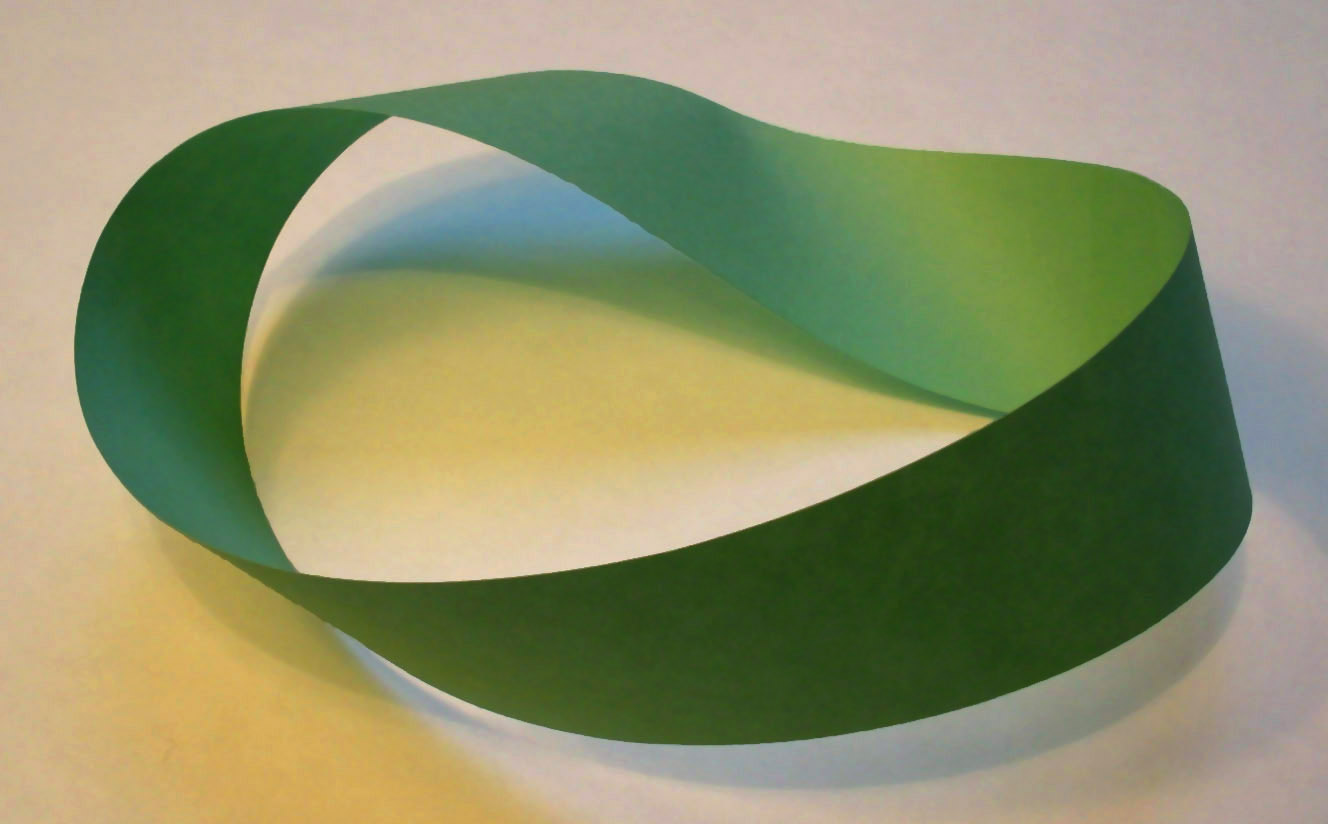
"A mathematician, standing puzzled at the photocopier and complaining to the secretary: "I set it to 'Single Sided Copy,' and now it comes out as a Möbius Strip!""

Theres also the classic, Is Hell Exothermic or Endothermic? exam question.